

The complete guide
How to Choose a Gym Backpack That Actually Works for Your Week
The two-bag problem
Here is a scene most people recognise. You leave the house with a work bag on one shoulder and a gym bag on the other. By the time you get to the office, one strap has slipped twice and you have swapped sides three times. At the end of the day you repeat the whole thing in reverse, except now one bag contains a damp towel and a pair of shoes that have been in a warm locker since lunchtime.
The usual fix is to just use one bag and accept the consequences. Shoes go in with the clean shirt. The wet swim kit goes in a plastic carrier bag that splits. Within a month, everything smells faintly of chlorine.
A gym backpack with proper internal separation solves this by design rather than by discipline. You do not have to remember to isolate the dirty things. The bag does it for you, because the dirty things live behind their own zip.
What the compartments are actually for
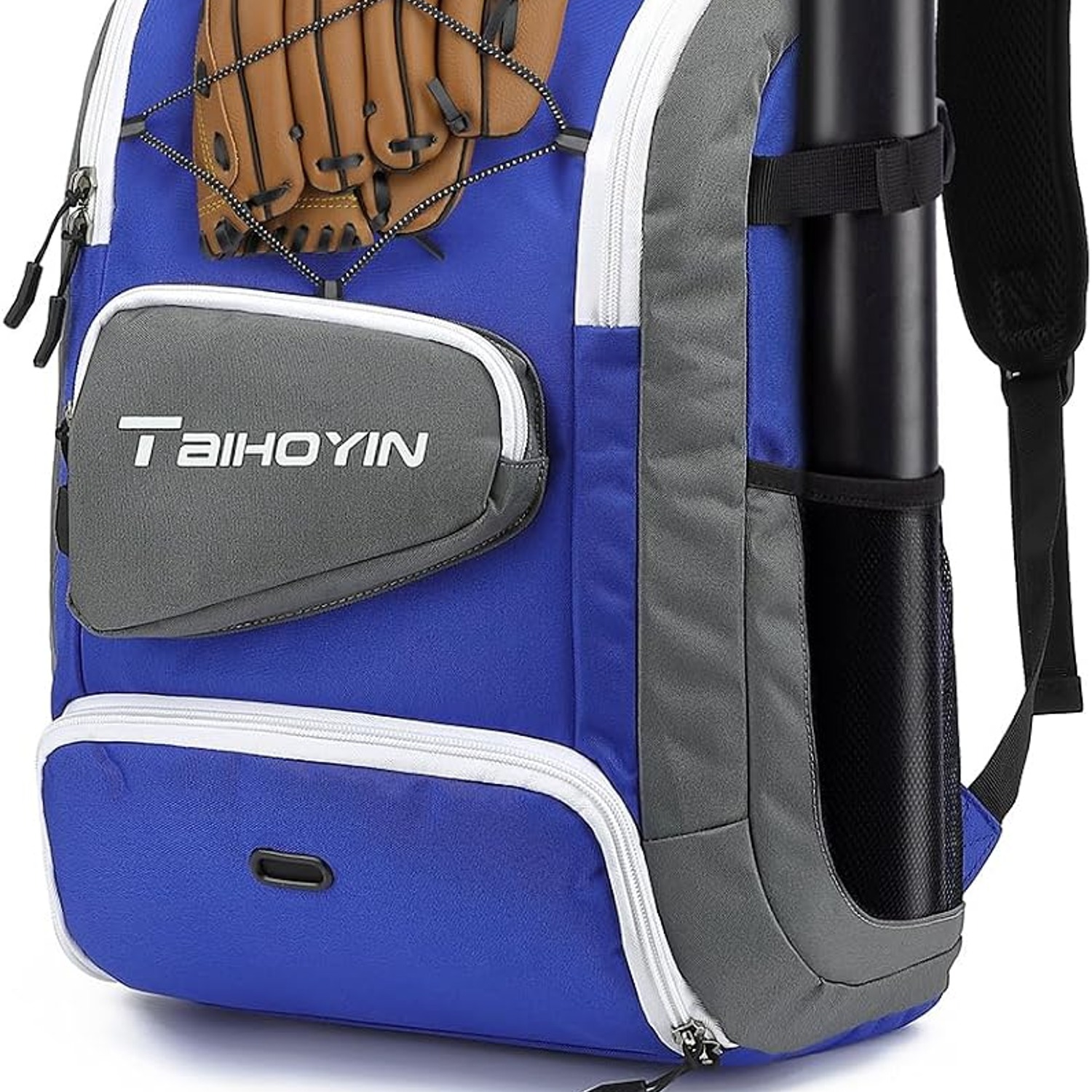
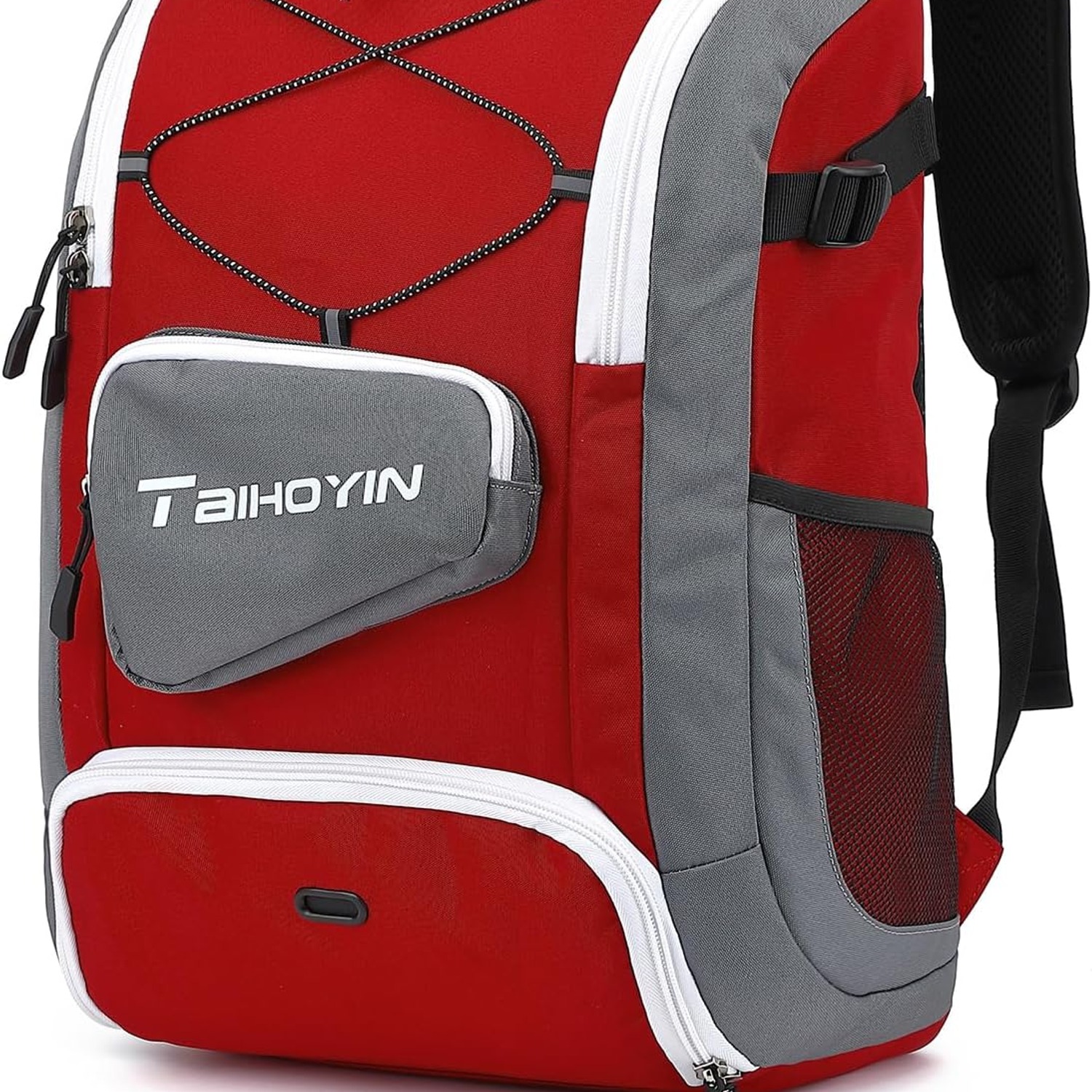
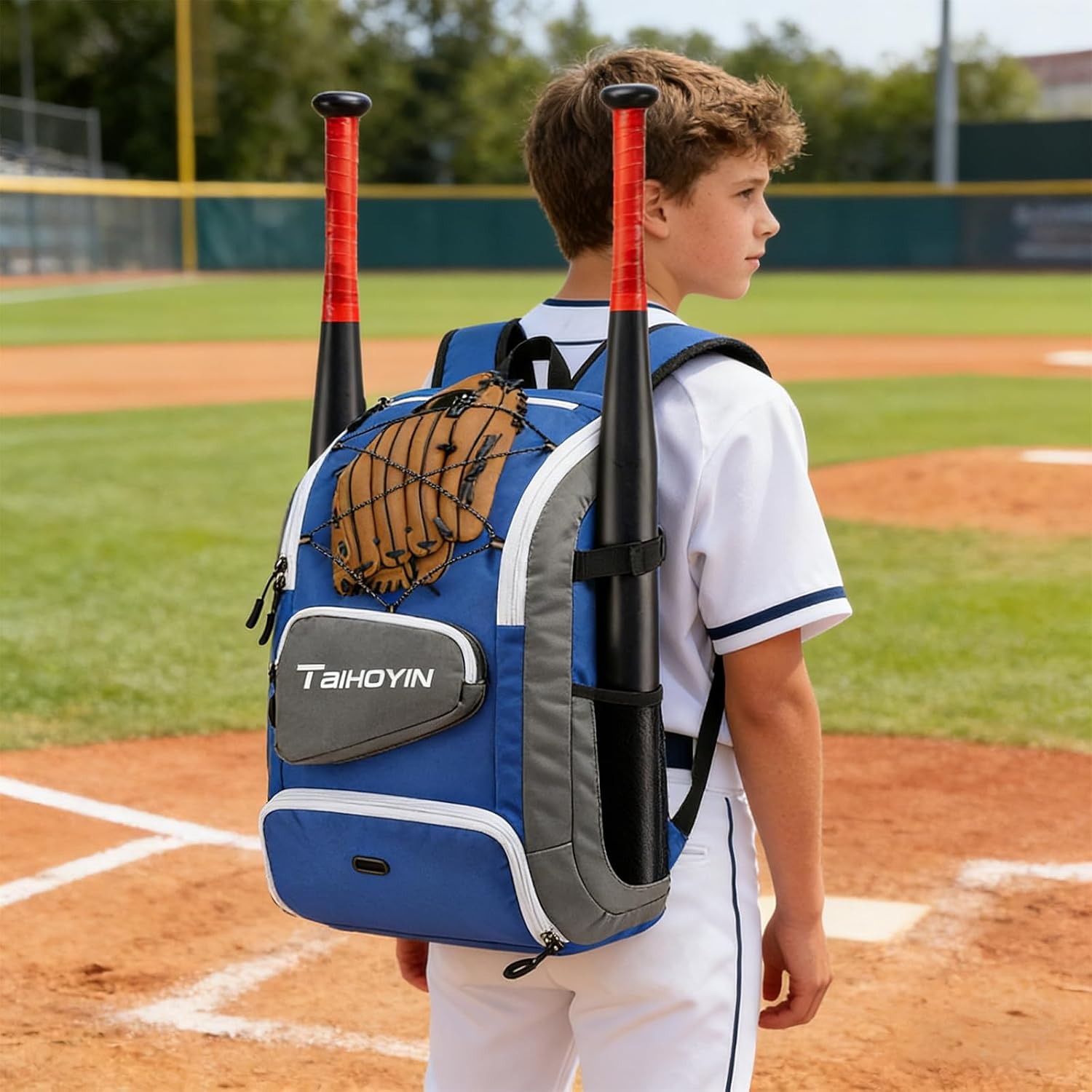
This bag gives you 30 litres across three compartments, plus a utility pocket. That number of divisions sounds modest, and it is, but it is the right modest.
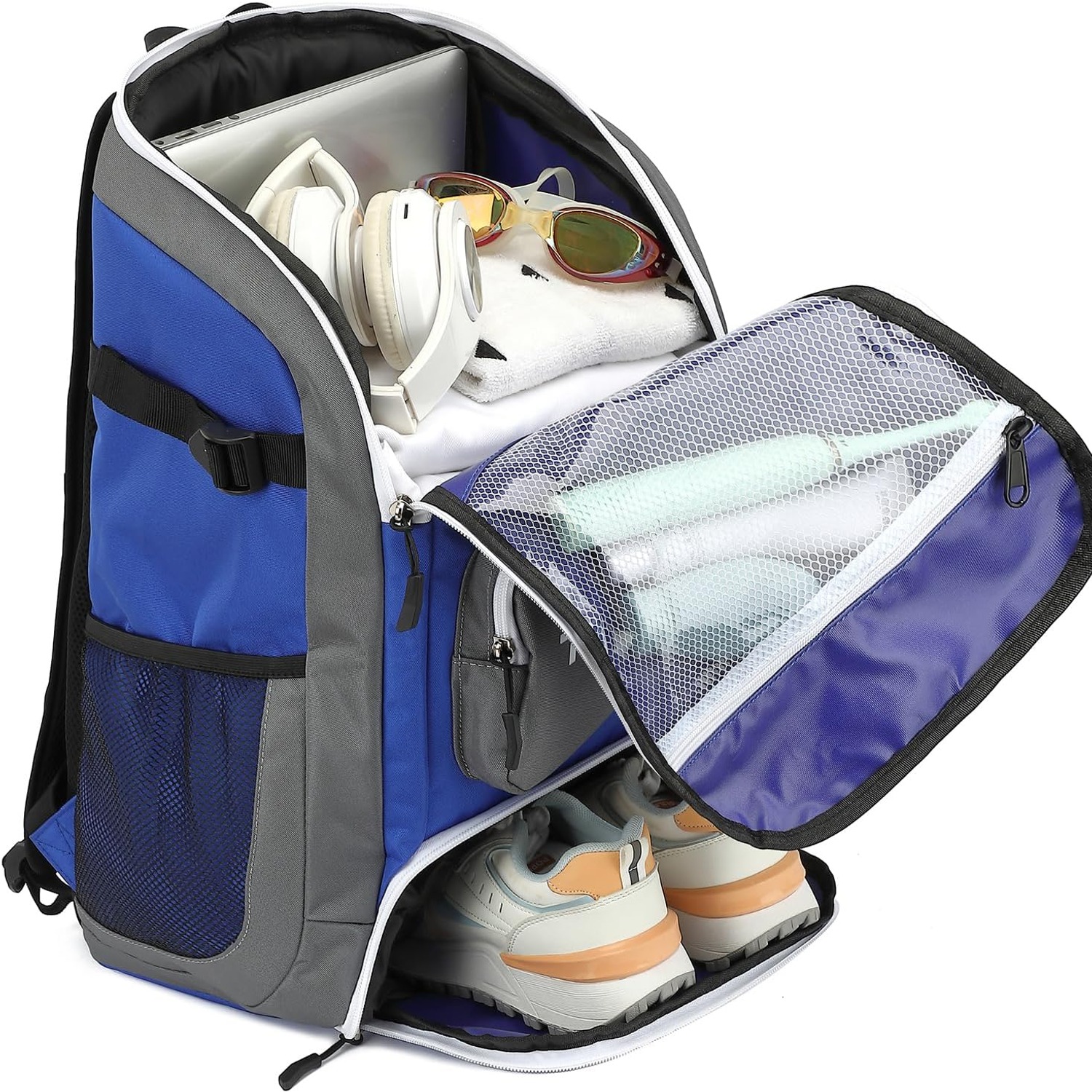
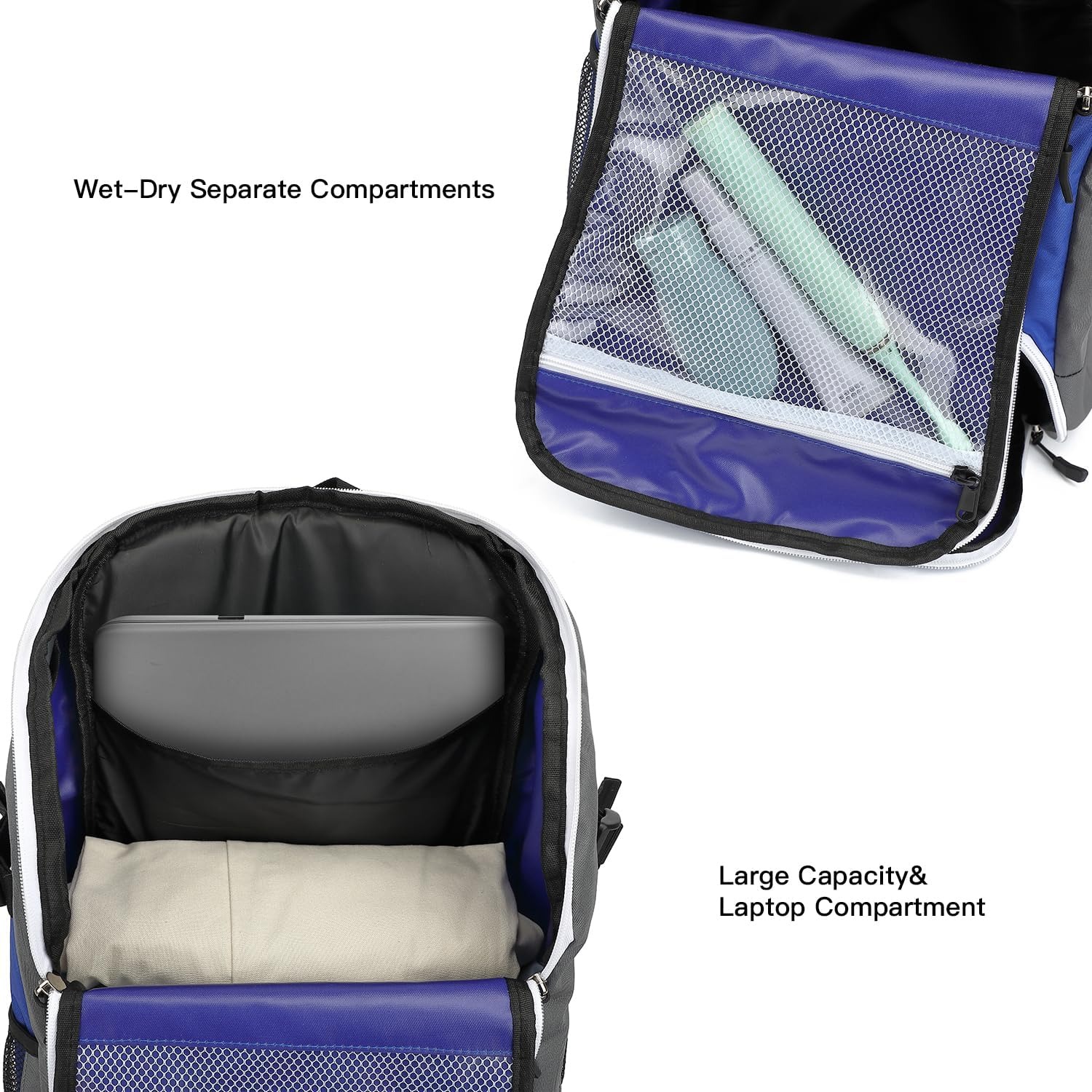
The base compartment is the shoe section. It opens from the outside, so your trainers never pass through the main space. That single feature changes how a bag ages. Sole grit, grass, gym floor dust, pool deck water, all of it stays in one zone that you can wipe out. The main compartment stays clean because nothing dirty ever enters it.
The main compartment takes the bulk. A change of clothes, a towel, a water bottle, your laptop and whatever else the day requires. At 49.5 cm tall and 29 cm wide, there is real room in here. It is not a cavernous travel pack, but it is considerably more than a slim daypack.
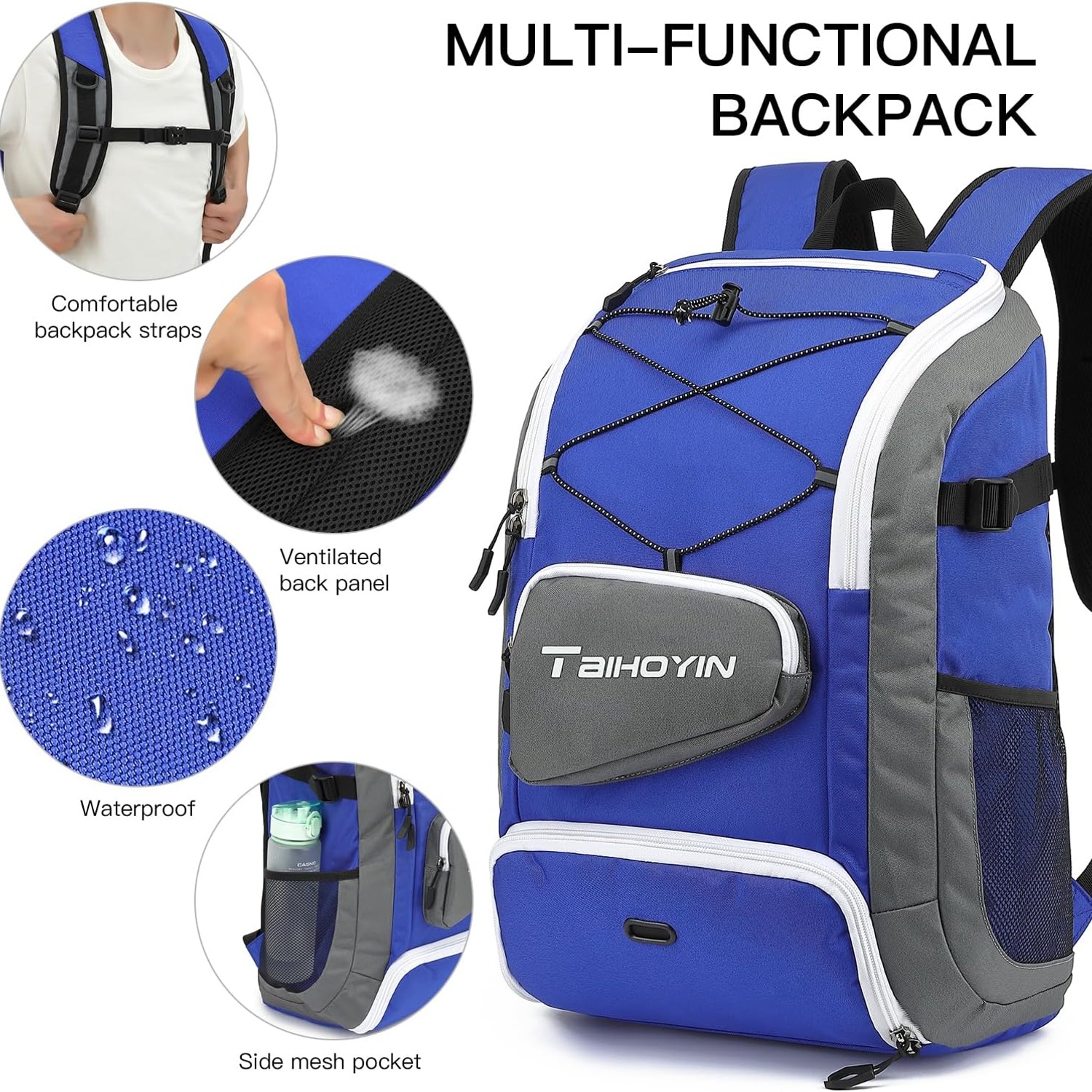
The front and utility pocket cover the small things that otherwise sink to the bottom of everything. Keys, a padlock, headphones, a protein bar, a gym card. The reason small pockets matter is not storage, it is time. Digging through 30 litres to find a locker key in a busy changing room is a small, daily annoyance that a pocket eliminates.
Why waterproof matters more for a gym bag than a daypack
Most backpacks get wet from the outside. Gym bags get wet from the inside too.
This one is listed as waterproof, with a soft polyester shell. That does two jobs. On the way in, rain and splashes stay out. On the way home, a damp towel or a wet swimsuit is contained by the same material rather than soaking through to the back panel and then to your shirt.
The sport type listed for this bag is swimming, and that tells you something about its intended life. Pool bags live in a permanently damp environment. Chlorine, condensation, puddled changing room floors. A polyester shell handles that far better than canvas or untreated cotton, which absorb water and then take a day to dry.
A practical note. No zipped bag is truly sealed, because zip teeth are not a watertight join. Treat this as strongly water resistant. It will shrug off rain and contain damp kit. It is not a dry bag for kayaking.
Weight and why 0.74 kg is worth noticing
Empty weight is one of the most ignored numbers on a bag spec sheet, and it should not be.
This bag weighs 0.74 kg before you put anything in it. Plenty of structured 30 litre packs weigh well over a kilo, sometimes closer to one and a half. That difference does not sound like much on paper. It becomes obvious on a twenty-minute walk with a laptop, shoes, a towel and a full water bottle already adding weight.
Light does not have to mean flimsy. The bag has a soft shell rather than a rigid frame, which saves weight, and the compartment structure provides shape instead. The practical result is a bag that holds its form when packed and collapses a bit when it is not, which makes it easier to store under a desk or in a locker.
Fitting it to your actual week
Think about your heaviest day, not your average day.
If your heaviest day is work, gym and a commute, you need room for clothes plus shoes plus a laptop. Thirty litres covers that with a little spare. If your heaviest day is a swim session, the volume requirement drops but the wet-kit requirement rises, and the waterproof shell becomes the main feature rather than the capacity.
If you are packing for a one-night trip, 30 litres is enough for a change of clothes, a wash bag and shoes. Two nights is doable if you are economical. Beyond that, you want something bigger.
A quick way to check before you buy. Pile your usual kit on the bed. If it fits inside a shoebox-and-a-half of volume with the shoes set aside separately, this bag will take it comfortably. If your pile is closer to two full shoeboxes, look at a larger size.
Getting the carry right
Two adjustments make almost all the difference, and most people never make either.
First, shorten the shoulder straps so the bag's base sits level with your waist, not hanging below it. A bag that rides low pulls your shoulders back and your head forward. A bag that rides high sits over your centre of gravity and stops feeling heavy.
Second, pack dense items close to your back. Laptop, water bottle, heavy shoes if they are in the main section. Light, bulky things like towels and jackets go toward the outside. The physics is simple. Weight held close to your spine is easier to carry than the same weight held away from it.
The top handle is there for the short moves. Lifting the bag off a bench, out of a locker, into a car boot. Use it rather than grabbing a shoulder strap, which is what stretches straps out of shape over time.
Keeping it in good condition
Care for this bag is simple and mostly about habit rather than product.
Wipe the shell with a damp cloth and a little mild detergent when it needs it, then let it air dry fully with the compartments open. Do not put it in a washing machine. Machine washing is the fastest way to wreck a water-resistant finish and distort the structure, and it is not necessary for a bag like this.
The daily habit matters more than the deep clean. Empty the shoe compartment and any damp pocket as soon as you get home, then leave the zips open. A bag that airs out every night never develops a smell. A bag that stays sealed with damp kit inside will, within a week.
Give the zips an occasional check. Grit from shoe compartments is the usual cause of zip failure in sports bags. A quick brush along the teeth takes ten seconds and prevents the one problem most likely to end a bag's life.
Avoid leaving it in direct sun for long stretches. UV degrades synthetic fabric and fades colour, and a car parcel shelf in summer is a harsher environment than most people assume.
The short version
This is a 30 litre polyester sports backpack with three compartments, a base shoe section, a utility pocket, adjustable straps and a top handle. It measures 49.5 by 29 by 21.5 cm and weighs 0.74 kg empty. The shell is listed as waterproof, and swimming is given as the sport type.
It makes sense if your days involve more than one activity and you are tired of carrying two bags to handle them. It makes less sense if you only ever go to the gym and back, where a simple holdall would do, or if you regularly travel for several nights, where you want more volume.
Check the dimensions against your real kit before you decide. If 30 litres with a separate shoe section matches how your week actually runs, this is a sensible, light, well-divided bag that will handle it.