

The complete guide
How to Choose a Large Gym Holdall That Actually Works
The problem with most gym bags
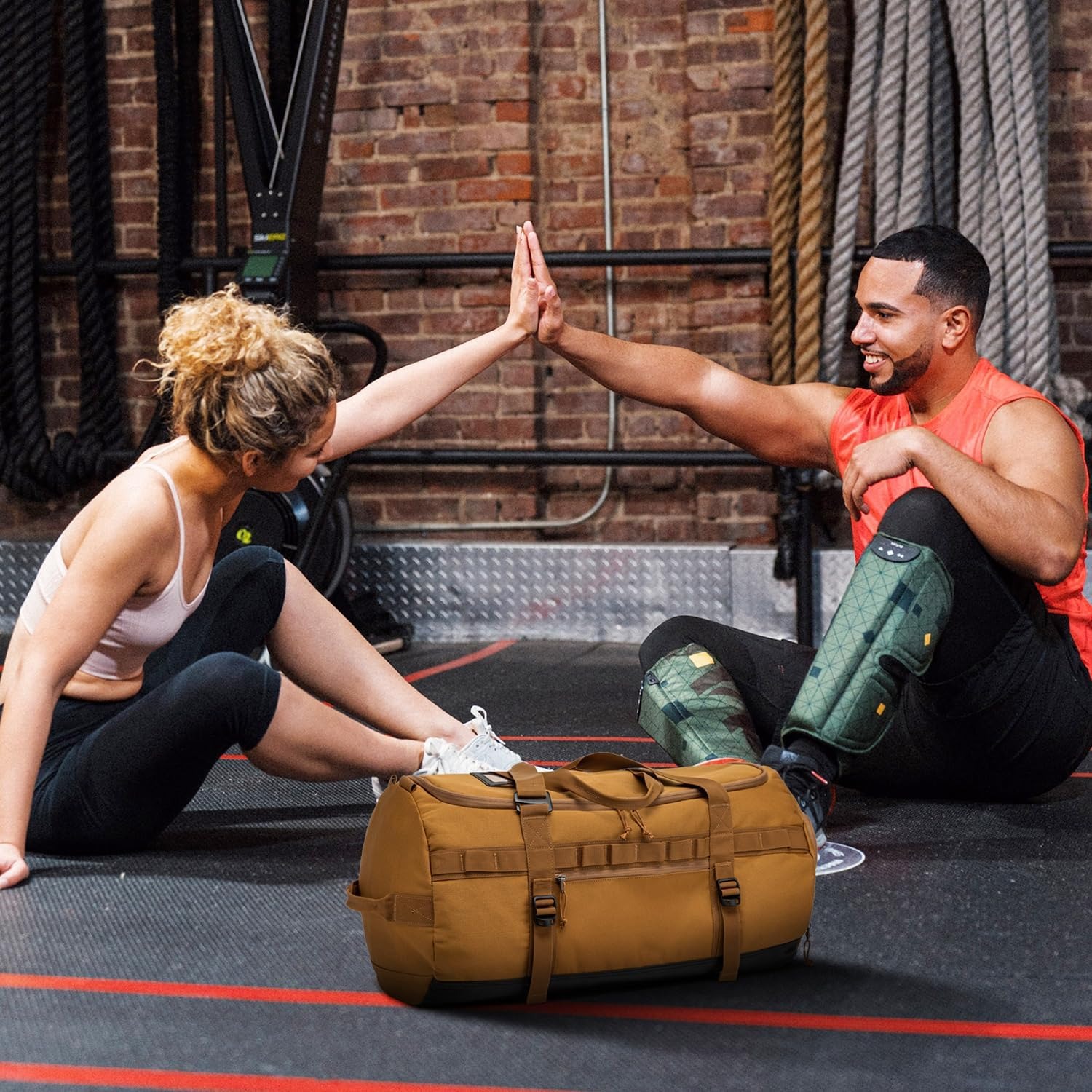
Almost everyone starts with the wrong bag. Usually it is a free one from a race, a cheap drawstring sack, or an old school rucksack that was never meant to carry wet trainers. Then the same two problems appear. The bag is too small, so you end up carrying a second plastic bag with your shoes in it. Or everything goes in one big space, so your clean shirt comes out smelling like the inside of a running shoe.
A large gym holdall solves both at once. You get one space big enough for everything, and at least one separate section for the things you do not want touching your clothes. That is the whole idea. The rest is detail.
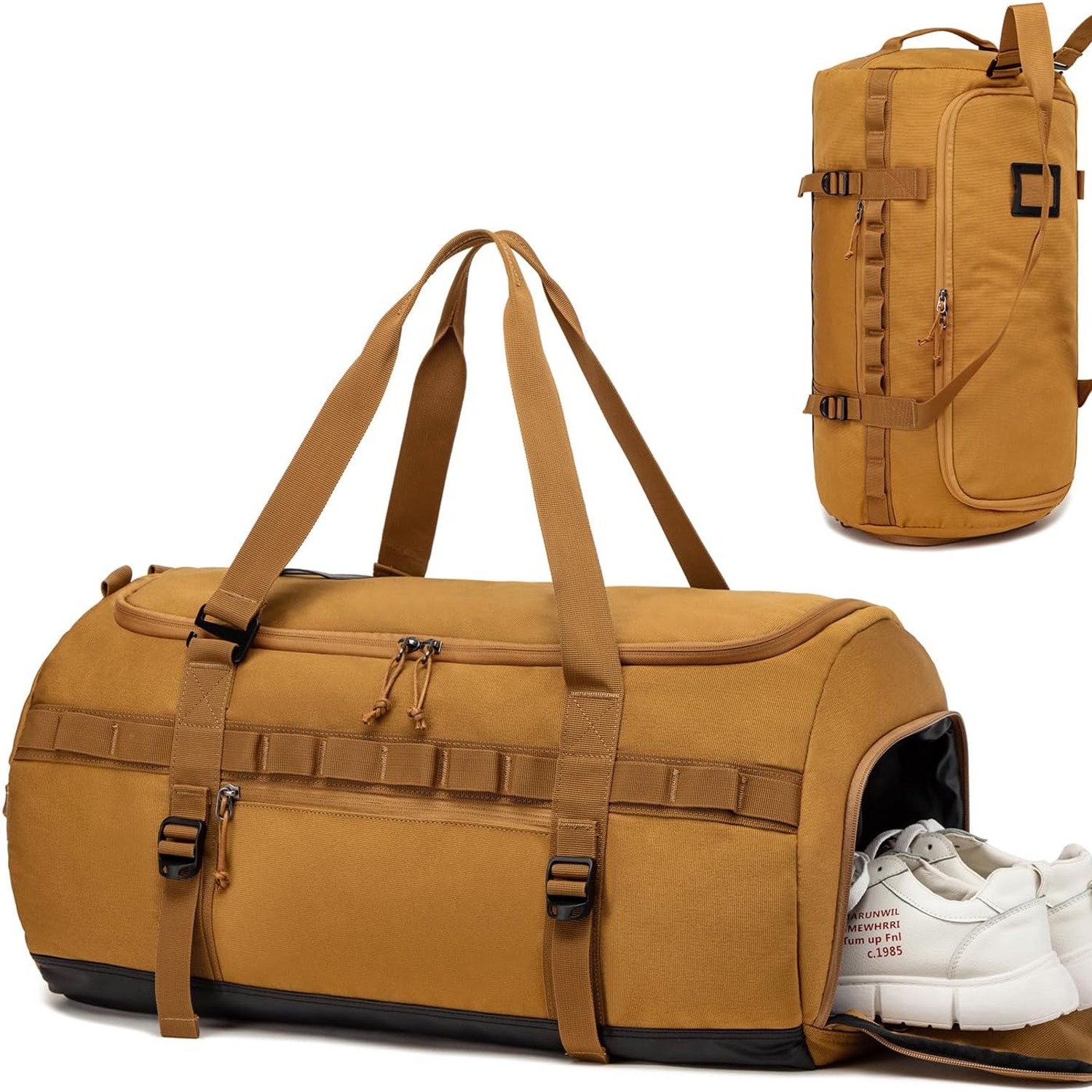
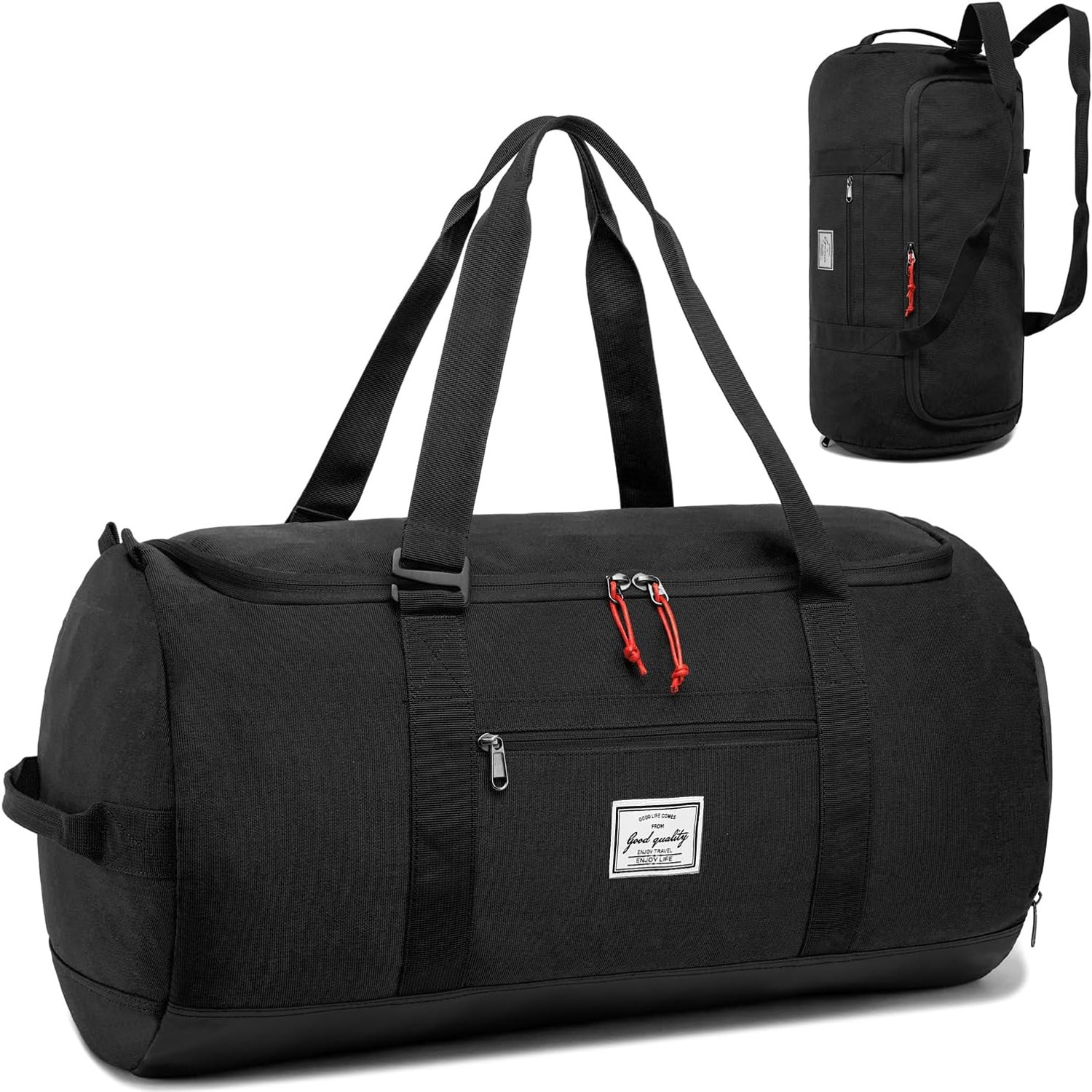
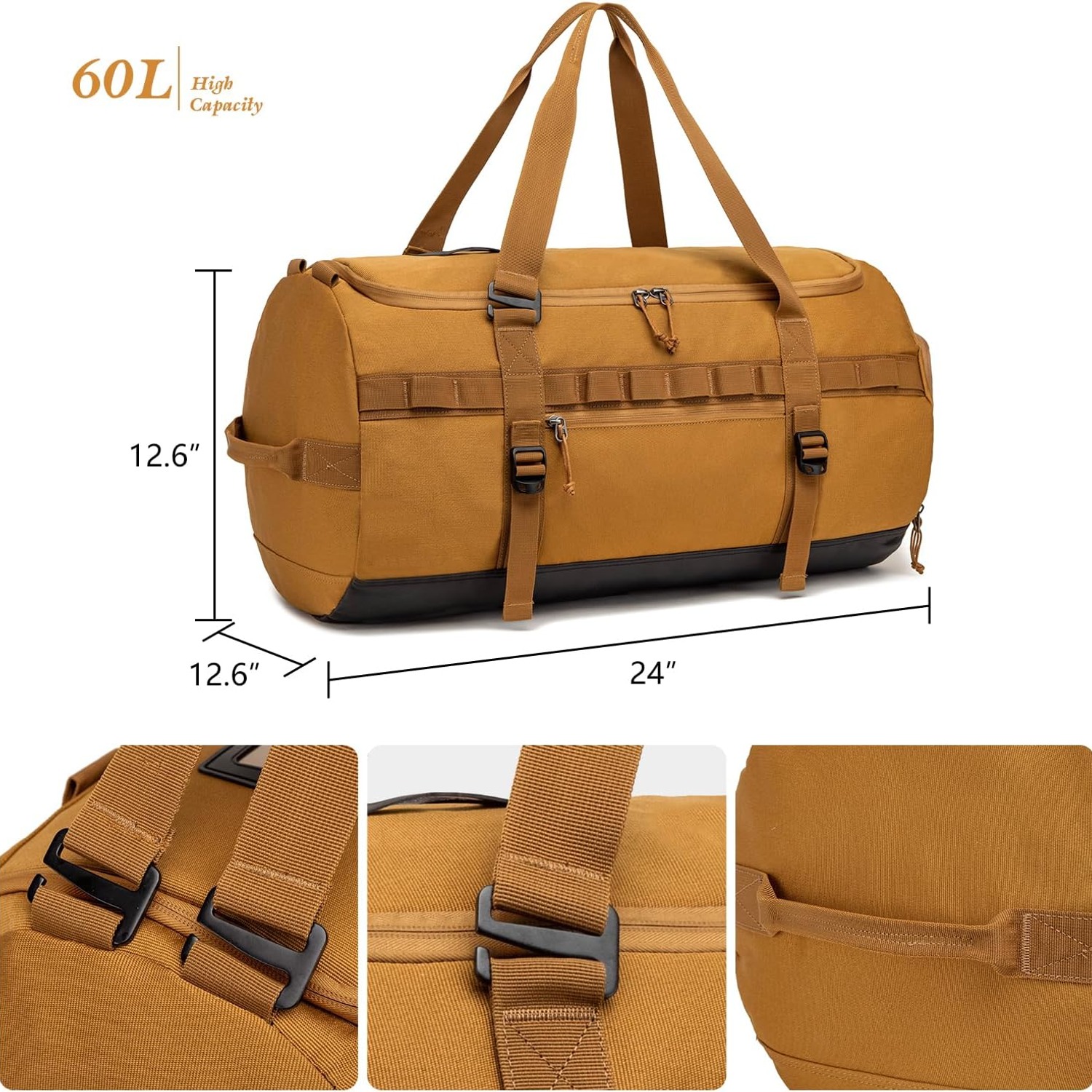
This bag is a 60 litre polyester duffle measuring 61cm long and 32cm square at each end, weighing 0.7kg empty. It has two compartments, a zip closure, web handles, and a convertible strap setup so you can carry it in your hand or on your back. Those few numbers tell you most of what you need to know, but it is worth unpacking what they mean in practice.
What 60 litres really holds
Litres are hard to picture. Here is a rough translation. Sixty litres is enough for five or six changes of gym clothes, a towel, a wash bag, a hoodie and a pair of trainers in the side pocket. For travel, it will cover a week of summer clothes for one person, or three or four days of winter clothes once jumpers and a jacket get involved.
It is bigger than a typical daily gym bag and smaller than a full suitcase. That middle ground is exactly where most people live. You are not going to use it for a two week holiday, but it will handle almost everything else, from a training weekend to a club trip to a hospital stay.
The 61cm length is worth noting if you fly. Most airlines cap cabin bags below this length, so this is a hold bag or a car and train bag. On the ground, that length is an advantage, because longer items like a rolled mat or a hockey stick bag of clothes fit without bending.
The shoe compartment is the feature you will use most
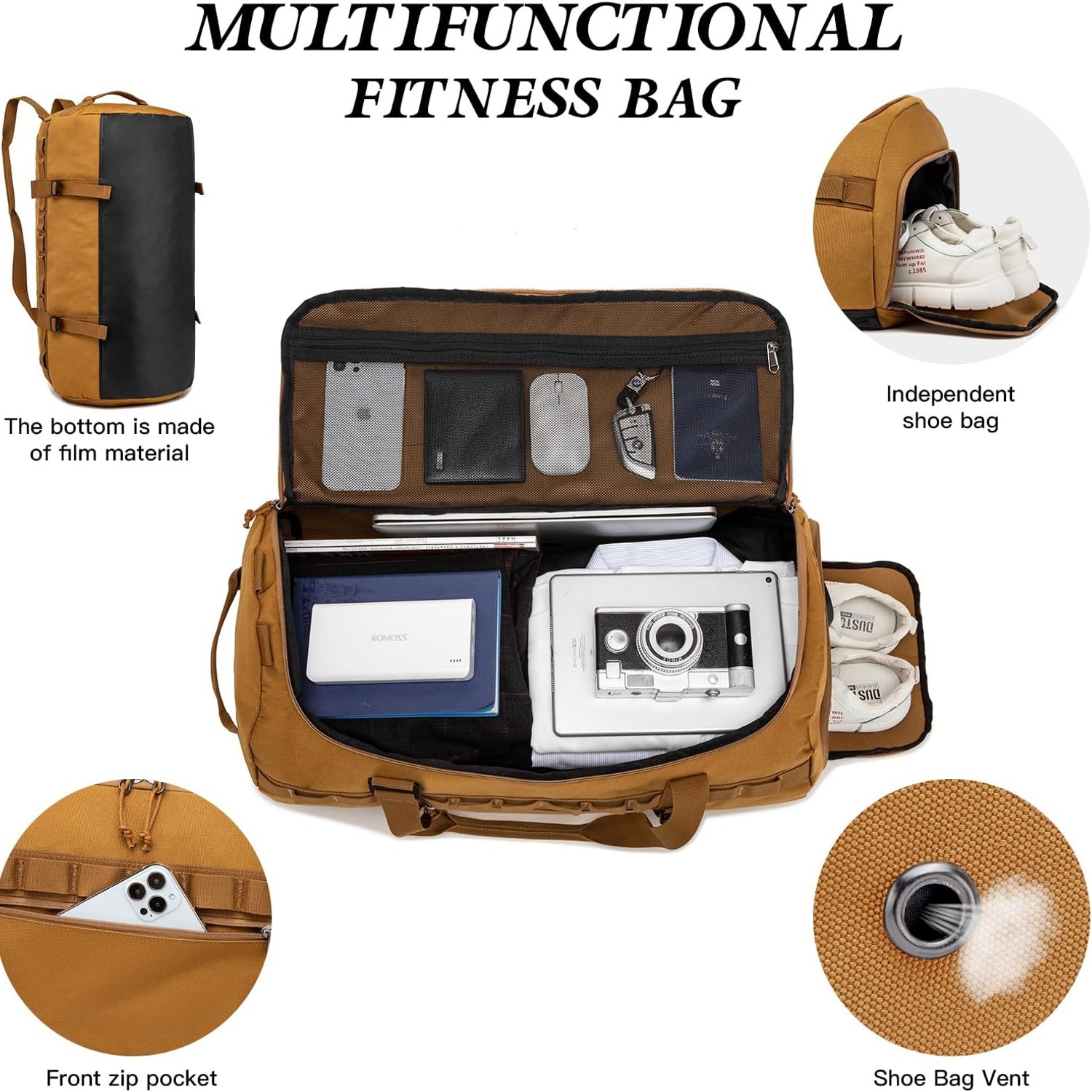
The side compartment has a breathable vent and is designed for shoes. People buy the bag for the capacity and then end up loving this pocket, because it does more than hold trainers.
Think about what you actually come home with after training. A wet towel. A damp t-shirt. Socks. Swimwear. None of that should sit against your clean clothes for the drive home, and in a single compartment bag it has nowhere else to go. A separate vented section gives it a home. The vent lets a little air through so the contents are not sealed in a plastic box.
A practical tip. If you train in the morning and go straight to work, put the dirty kit in the side pocket and the clean clothes in the main section, not the other way round. It sounds obvious. Most people do it backwards on the first day and only learn once.
Carrying it two ways
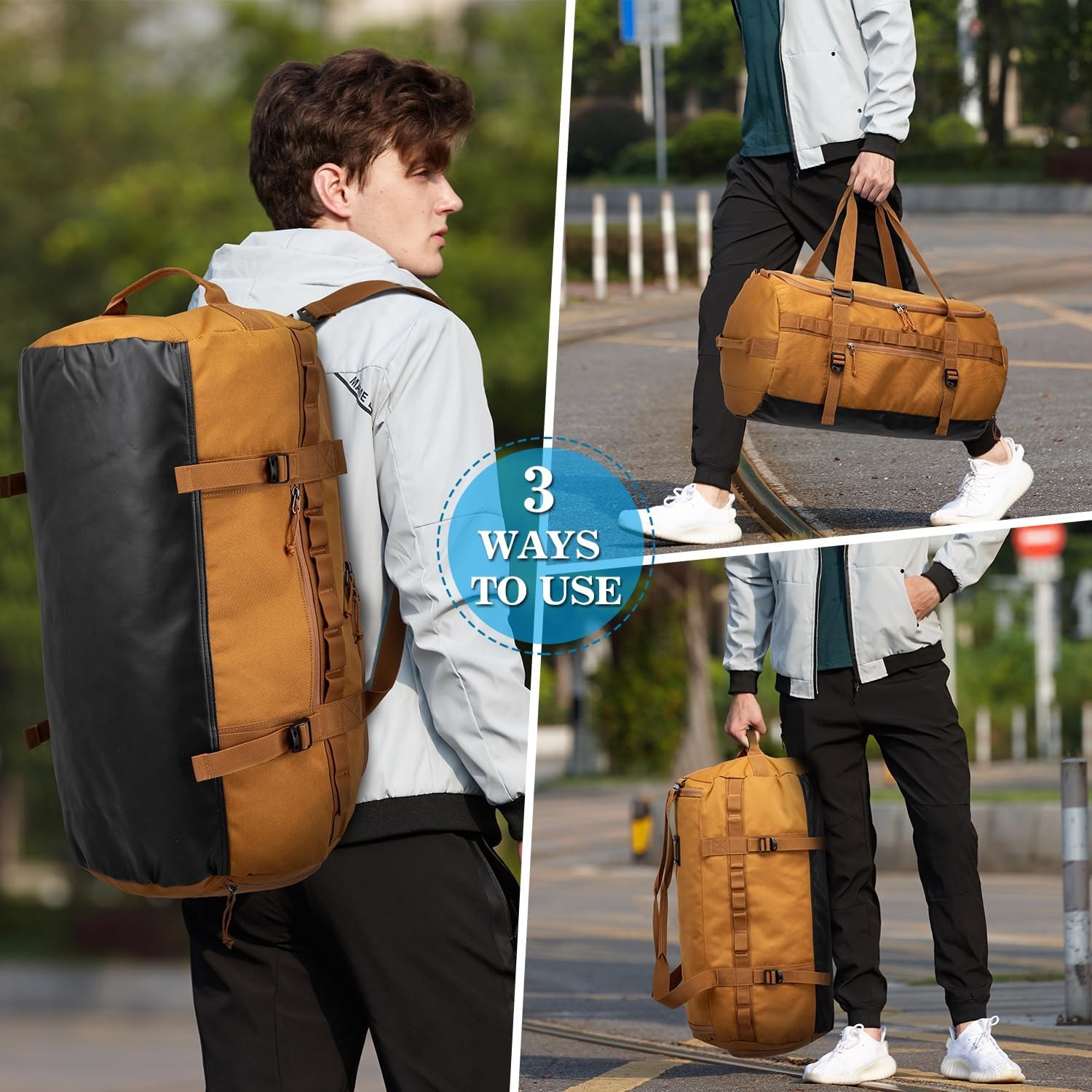
The strap type is convertible, which means you can adjust the straps to wear the bag on your back instead of carrying it by hand. The web handles across the body are the quick option for short walks, like car to gym door.
Backpack mode is where it earns its keep. Carrying 15kg on one shoulder for fifteen minutes is miserable and uneven. Across both shoulders it is simply a load. If your route involves public transport, a cycle, stairs or any kind of distance, use the straps. If you are just hopping out of the car, grab the handles.
A small habit helps here. Pack heavy things like shoes and water bottles low and close to your back. A bag that pulls away from you feels twice as heavy as one that sits against you.
Fabric, water and the base
The shell is polyester and the manufacturer lists the water resistance level as waterproof. For day to day use, that means rain on the walk from the car will not get through, and setting the bag on wet grass at a pitch side is fine.
Treat that rating sensibly. Water resistant fabric and a zip closure are not the same as a sealed dry bag. Zip teeth are the obvious weak point on any duffle, so if there is serious rain, carry it under a coat or put a bin liner around anything that absolutely must stay dry.
The base takes the most punishment on any holdall. Concrete floors, gravel car parks and train station platforms all grind away at it. Lift the bag rather than dragging it, and if you tend to set it down in the same rough spot every day, an old towel laid flat inside the base adds a bit of cushioning and keeps the bottom clean.
Who this suits
It fits a few clear groups. Gym members who need shoes, a towel and a change of clothes in one trip. People who travel for sport, where the kit list is long and the trip is short. Anyone who wants a weekend overnight bag that does not look like luggage. And anyone who needs a camping holdall bag for soft gear on a car trip.
It is less suited to a couple of uses. If you need a hiking pack with a waist belt and frame, this is not that. If your airline cabin rules are strict and you refuse to check a bag, the 61cm length will be a problem.
How to choose the right size for you
Here is the quick test. Take your heaviest week. Lay out everything you would normally pack, including shoes, and put it into a cardboard box. Measure the box. If the contents fit inside roughly 61cm by 32cm by 32cm, this is the right size for you.
If you are consistently packing less than half that, a smaller bag will be easier to handle. If you are routinely packing more, you probably want a suitcase for travel and this as the gym bag. Buying a bag that is slightly bigger than you need is usually the safer mistake, because a half full duffle compresses. A bag that is too small never gets bigger.
Looking after it
Care is simple and makes a real difference to how long the bag lasts.
Wipe the outside with a damp cloth and mild soap when it needs it, then let it dry in the air. Do not put it in the washing machine, because that stresses the zips and stitching and can affect the water resistant finish. Do not tumble dry it.
Empty the shoe compartment every time. Kit left in a closed pocket for three days is where bag smells are born. Leave both zips open while it dries so air moves through. Shake out grit before it works its way into the zip track, since a jammed zip is the most common way a perfectly good bag ends up in the bin.
Store it loosely rather than crushed under other things. Soft bags keep their shape better when they are not squashed flat for months.
The short version
You get a 60 litre polyester holdall, 61cm by 32cm by 32cm, at 0.7kg empty. Two compartments, with the side one vented for shoes or wet kit. A zip closure, web handles, and convertible straps so you can carry it by hand or on your back. The water resistance level is listed as waterproof.
If your current routine involves a second plastic bag for your trainers, this fixes it. If you want one bag that covers the gym, a weekend away and the occasional camping trip, the size and layout are sensible. Check the 61cm length against your airline before you plan on cabin travel, and otherwise this is a straightforward, light, large capacity sports bag that does the job without fuss.